
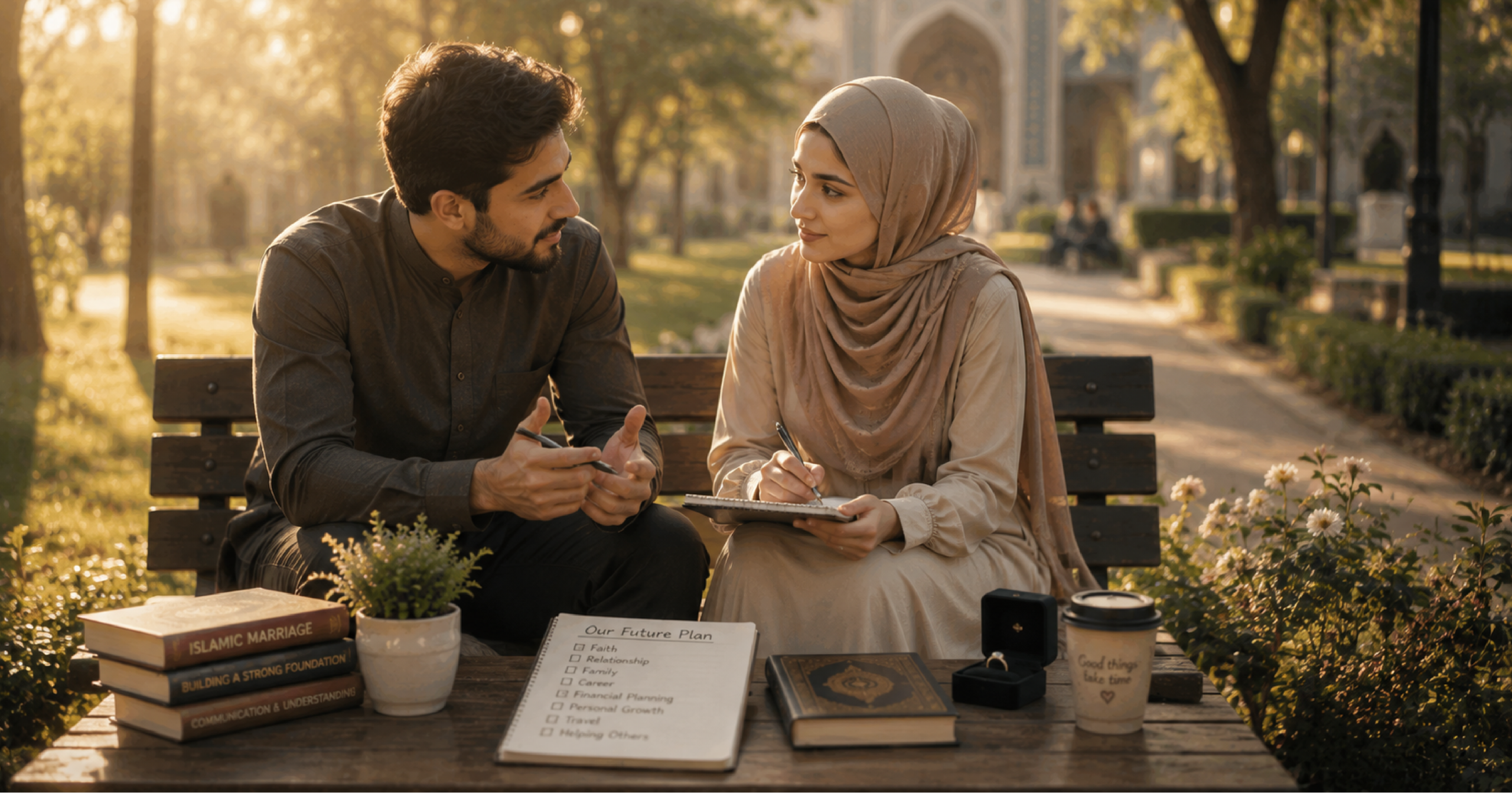
A Practical Guide for Muslim Couples Before the Nikah
Planning a wedding is exciting. Choosing a venue, sending invitations, shopping for outfits, tasting the menu, it all feels like preparing for one of the biggest days of your life.
And it is.
But here’s the question few couples stop to ask:
Are we spending as much time preparing for our marriage as we are preparing for our wedding?
For many engaged couples, the answer is no.
Months are spent choosing flowers, photographers, and décor, yet only a few conversations are devoted to how they’ll handle disagreements, manage finances, support each other through difficult seasons, or build a home centered around faith.
The wedding lasts a day.
Marriage, insha’Allah, lasts a lifetime.
If you’re wondering how to prepare for marriage, the answer goes far beyond planning the nikah ceremony. It means preparing emotionally, spiritually, financially, and practically for the life you’ll build together.
The good news? These are skills that can be learned.
Research consistently shows that couples who intentionally prepare for marriage communicate better, solve problems more effectively, and enter marriage with greater confidence than those who simply assume they’ll “figure it out later.” The strongest marriages aren’t built by chance, they’re built through preparation, honest conversations, and a shared commitment to grow together. Research on premarital education has found meaningful improvements in communication and relationship skills among participating couples. Journal of Marriage and Family review on premarital education
Key Takeaways
-
- Preparing for marriage is far more important than planning the wedding.
-
- Healthy marriages begin with honest conversations before the nikah.
-
- Islam encourages taking the means (asbab) while placing trust in Allah.
-
- Emotional, financial, spiritual, and family preparation all matter.
- A structured premarital education course can help couples build the skills they need before challenges arise.
Why Most Couples Prepare for the Wedding Instead of the Marriage
There’s nothing wrong with wanting a beautiful wedding.
Islam encourages celebrating marriage, sharing joy with family and friends, and beginning this new chapter with gratitude.
The problem isn’t preparing for the wedding.
The problem is stopping there.
Many couples spend hundreds of hours planning a single day while investing only a fraction of that time preparing for the decades that follow.
It’s understandable why this happens. Wedding planning comes with deadlines, checklists, and visible progress. Marriage preparation often feels less urgent because the challenges seem far away.
But reality usually looks different.
Within the first year of marriage, couples begin navigating decisions they may never have discussed before:
-
- How do we handle disagreements?
-
- Who manages finances?
-
- How often will we visit our families?
-
- What happens when career plans change?
-
- How will we raise our children?
-
- What does practicing Islam together actually look like at home?
These questions don’t suddenly appear after the wedding, they’ve always been there. Marriage simply brings them into daily life.
This is exactly why intentional preparation matters.
The American Association for Marriage and Family Therapy notes that premarital counseling helps couples strengthen communication, manage conflict, and establish realistic expectations before marriage begins. Likewise, decades of relationship research show that couples benefit from learning healthy communication and problem-solving skills before patterns of conflict become established.
If you’ve already read our guide on 10 Questions Every Couple Should Ask Before Marriage, you’ve seen how important these conversations are. This article takes the next step by showing how to prepare for those conversations, and how to turn them into habits that strengthen your marriage from day one.
What Does “Preparing for Marriage” Actually Mean?
Many people think marriage preparation means attending a few counseling sessions or reading a book together.
Those can certainly help.
But true preparation is much broader.
Think of it as preparing four foundations that will support your marriage long after the wedding photographs have been framed.
1. Emotional Preparation
Love is important.
So is emotional maturity.
Marriage joins two different personalities, communication styles, family backgrounds, and life experiences.
Preparing emotionally means learning things like:
-
- How you respond to stress.
-
- How you express love.
-
- How you handle disappointment.
-
- How you apologize.
-
- How you repair after conflict.
These skills often matter far more than having identical personalities.
Relationship researcher Dr. John Gottman’s work has repeatedly shown that successful marriages aren’t built on the absence of conflict, but on how couples repair after disagreements and maintain respect during difficult conversations.
2. Spiritual Preparation
For Muslim couples, marriage isn’t only a legal contract.
It’s an act of worship.
Allah says:
“And among His signs is that He created for you from yourselves mates that you may find tranquility in them; and He placed between you affection and mercy.”
(Surah Ar-Rum 30:21)
Notice that Allah describes marriage using words like tranquility, love, and mercy.
These qualities don’t appear automatically after the nikah.
They are nurtured over time through patience, kindness, forgiveness, and shared worship.
Preparing spiritually means asking questions such as:
-
- How will we encourage one another in salah?
-
- How will we continue learning our deen together?
-
- How will we respond when one of us goes through a weaker period of iman?
-
- How will we make dua together as a family?
Preparing spiritually also means remembering an important Islamic principle:
Taking the means (asbab) never contradicts trusting Allah (tawakkul).
Just as we prepare for travel, seek medical treatment when we’re ill, and study before examinations, preparing for marriage is part of acting responsibly while placing our trust in Allah.
3. Practical Preparation
Many marital disagreements don’t begin because couples lack love.
They begin because they never discussed expectations.
Questions like:
-
- Who creates the monthly budget?
-
- How will household responsibilities be shared?
-
- Where will we live?
-
- What role will our families play?
-
- What financial goals do we have?
These aren’t uncomfortable conversations because something is wrong.
They’re valuable because they prevent unnecessary misunderstandings later.
4. Shared Vision
One of the most overlooked parts of Muslim marriage preparation is creating a shared vision for the future.
Where do you hope to be five years from now?
What kind of home do you want to build?
How will your family serve your community?
How will you continue growing together as Muslims?
Marriage isn’t simply about solving today’s problems.
It’s about moving toward the same destination.
Without a shared direction, even two people who love each other can slowly begin walking different paths.
7 Practical Ways to Prepare for Marriage
Preparing for marriage isn’t about becoming perfect before the nikah.
It’s about building habits, conversations, and expectations that will help your relationship thrive long after the wedding celebrations end.
Here are seven practical ways to prepare.
1. Know Yourself Before Expecting Someone Else to Know You
Understanding themselves.
Marriage has a way of revealing parts of us we didn’t know existed.
Stress exposes our coping mechanisms.
Conflict reveals our communication habits.
Responsibility uncovers our priorities.
Before asking your future spouse to understand you, ask yourself:
-
- What makes me feel appreciated?
-
- How do I respond when I’m hurt?
-
- What habits from my family do I want to continue?
-
- Which habits do I hope to change?
-
- What fears am I bringing into marriage?
The more self-aware you become before marriage, the easier it becomes to communicate honestly after marriage.
The Prophet ﷺ said:
“The strong person is not the one who defeats others in wrestling. Rather, the strong person is the one who controls himself when angry.”
(Sahih al-Bukhari; Sahih Muslim)
Strength in marriage often begins with self-awareness and self-control, not with changing your spouse.
2. Have the Conversations Most Couples Avoid
Many engaged couples assume they’ll naturally figure things out after marriage.
Some do.
Many don’t.
Instead of hoping important conversations happen naturally, schedule them intentionally.
Talk about:
-
- Finances
-
- Children
-
- Career goals
-
- Family expectations
-
- Conflict styles
-
- Faith and daily religious practice
-
- Physical and emotional intimacy
-
- Long-term dreams
These discussions aren’t designed to test your compatibility.
They’re designed to deepen your understanding of one another.
If you’re not sure where to begin, start with our complete guide:
10 Questions Every Couple Should Ask Before Marriage
Those conversations often become the foundation of a stronger, healthier marriage.
3. Learn Healthy Conflict Resolution Before You Need It
Many couples believe that a happy marriage is one where arguments rarely happen.
Research tells a different story.
Every healthy marriage experiences disagreement. The difference is how couples handle those disagreements.
Instead of asking:
“Will we fight?”
Ask:
-
- How do we calm ourselves during conflict?
-
- How do we apologize?
-
- How do we make each other feel heard?
-
- How do we reconnect afterward?
These skills don’t magically appear after the wedding.
They can, and should, be practiced beforehand.
If you’d like to understand why these early habits matter so much, read our guide:
Internal Link: 5 Reasons Couples Struggle in Year One of Marriage
Many of the struggles newlyweds experience aren’t caused by conflict itself—they’re caused by never learning how to handle it together.
4. Understand Your Rights and Responsibilities in Islam
Love is essential.
But Islamic marriage isn’t built on emotions alone.
It’s built upon mutual rights, responsibilities, mercy, and accountability before Allah.
The Prophet ﷺ said:
“The best of you are those who are best to their wives.”
(Jami’ at-Tirmidhi)
Preparing for marriage means learning:
-
- Rights and responsibilities of both spouses
-
- Financial obligations
-
- Kindness during disagreement
-
- Mutual consultation (shura)
-
- Respect and emotional support
-
- The importance of forgiveness
Many conflicts don’t arise because people intentionally hurt one another.
They arise because each spouse entered marriage with different assumptions about what Islam actually teaches.
Learning together before the nikah helps replace assumptions with understanding.
As Allah reminds us:
“…Live with them in kindness…”
(Surah An-Nisa 4:19)
Marriage isn’t simply about knowing Islamic rulings.
It’s about living those values every single day.
5. Prepare Financially as a Team
Money is one of the most common sources of marital stress, not because couples don’t love each other, but because they often have different relationships with money.
One spouse may believe saving every extra dollar creates security.
The other may believe money should be enjoyed while it’s available.
Neither approach is automatically right or wrong.
Problems arise when expectations remain unspoken.
Before marriage, discuss:
-
- Monthly budgeting
-
- Savings goals
-
- Debt
-
- Mahr expectations
-
- Charitable giving
-
- Career plans
-
- Emergency funds
-
- Financial decision-making
The American Psychological Association has consistently identified financial stress as one of the leading sources of stress for adults, making healthy financial communication an important part of relationship well-being.
American Psychological Association – Stress in America
Islam also encourages balance in spending.
Allah says:
“And those who, when they spend, are neither extravagant nor stingy, but are ever, between that, justly moderate.”
(Surah Al-Furqan 25:67)
Preparing financially isn’t about becoming wealthy.
It’s about becoming partners.
6. Prepare for Families – Not Just Each Other
Marriage joins two people.
It also brings together two families.
One of the most overlooked aspects of Muslim marriage preparation is discussing expectations surrounding parents, siblings, and extended family.
Ask questions like:
-
- How often will we visit our families?
-
- What boundaries do we want to establish?
-
- How will we handle advice we didn’t ask for?
-
- What traditions matter most to each family?
-
- How will we make decisions together if family expectations differ?
These conversations aren’t about choosing one family over another.
They’re about ensuring your marriage becomes a united partnership.
The Quran reminds believers to honor parents while also establishing their own households with wisdom and compassion.
When expectations are discussed before marriage, they’re far less likely to become sources of resentment afterward.
7. Invest in Guided Premarital Education
There’s a reason athletes have coaches.
Professionals have mentors.
Businesses have advisors.
Preparation matters.
Marriage deserves the same level of intentionality.
A quality premarital education course doesn’t tell couples whether they should marry.
It helps them build the communication skills, practical understanding, and shared expectations they’ll rely on throughout marriage.
That’s exactly why Islamic premarital counseling is becoming increasingly valued—not because relationships are weak, but because couples recognize that preparation strengthens them.
If you’re still wondering whether it’s worth it, read:
Internal Link: Why Islamic Premarital Counseling Matters More Than You Think
Guided education gives couples a safe space to discuss topics they may otherwise avoid until after the wedding.
That’s far easier than trying to repair misunderstandings later.
Wedding Planning vs. Marriage Preparation
One prepares for a celebration.
The other prepares for a lifetime.
| Wedding Planning | Marriage Preparation |
| Choosing the venue | Learning healthy communication |
| Buying outfits | Understanding Islamic rights and responsibilities |
| Invitations | Discussing family expectations |
| Catering | Creating a shared financial plan |
| Photography | Learning conflict resolution |
| Decorations | Building emotional intimacy |
| Wedding timeline | Creating a shared vision for the future |
The wedding memories will last a lifetime.
But so will the habits you build before marriage.
Choose to invest in both.
Marriage Preparation Checklist
Before your nikah, ask yourselves:
 Have we discussed finances openly?
Do we understand each other’s communication styles?
Have we talked about children and parenting?
Do we understand our Islamic rights and responsibilities?
Have we discussed family boundaries?
Do we know each other’s long-term goals?
Have we talked about intimacy respectfully and honestly?
Have we prayed Istikharah and made sincere dua?
Have we sought advice from trusted mentors or scholars?
Have we completed a structured premarital education course together?
If you answered “not yet” to several of these, don’t panic.
It doesn’t mean you’re unprepared.
It simply shows you where meaningful conversations can begin.
Conclusion
A beautiful wedding is something you’ll remember.
A healthy marriage is something you’ll build.
The flowers will fade.
The decorations will come down.
The photographs will be placed in albums.
But the habits you create before marriage, the way you communicate, solve problems, support one another, and turn back to Allah together, will shape your relationship for years to come.
Preparing for marriage isn’t about expecting problems.
It’s about building the confidence, trust, and understanding to face life’s challenges together.
As Muslims, we believe in both taking the means (asbab) and placing our trust in Allah (tawakkul).
Marriage preparation is one of those means.
Continue Your Marriage Preparation Journey
Every couple enters marriage with hopes, dreams, and good intentions. What often makes the difference isn’t the absence of challenges, it’s having the tools to navigate them together.
Dr. Suzy Ismail’s Certificate of Premarital Education was created to help engaged and seriously considering couples prepare for marriage through guided conversations, practical relationship skills, and authentic Islamic principles. The course explores communication, conflict resolution, finances, family dynamics, emotional connection, and the spiritual foundation of marriage, helping couples build clarity and confidence before saying “I do.”
You may also find these guides helpful as you continue preparing for marriage:
Together, these resources provide a roadmap for building a marriage that’s prepared—not just a wedding that’s planned.

 in Knowledge